How Many Reps Do You Actually Need?
CAPACITY PLANNING
How Many Reps Do You Actually Need?
Most hiring plans start with a headcount. Better ones start with the revenue target and work backward through quota, ramp time, attrition and pipeline.
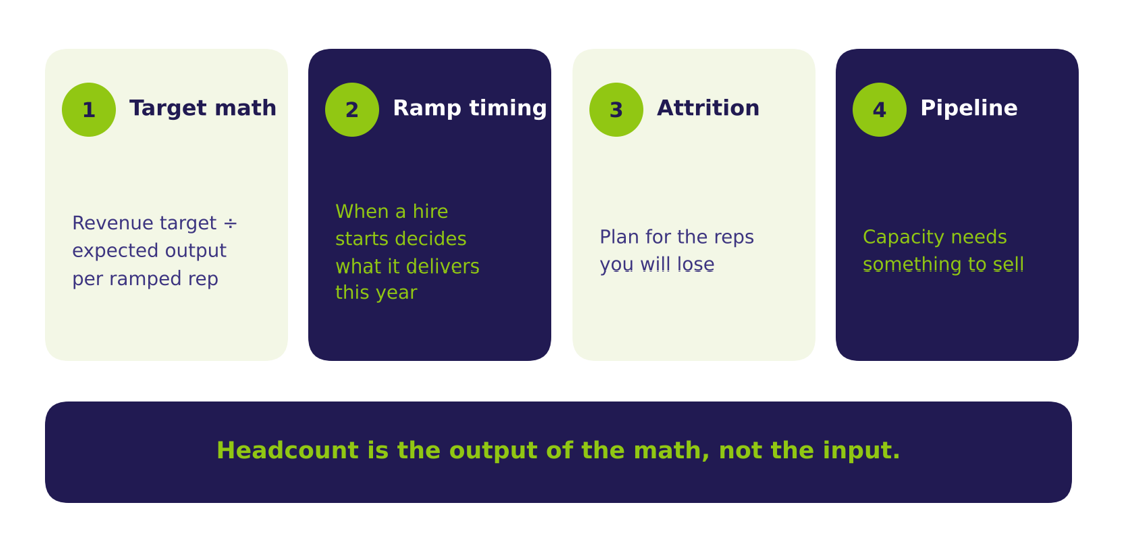
“We need eight more reps.” It is one of the most common sentences in a growth-stage planning meeting, and one of the least examined. Where did eight come from? Often it is last year's plan, a competitor's team size, or a feeling that the current team is stretched.
Headcount is the output of the math, not the input to it.
Capacity planning replaces the feeling with arithmetic you can defend to your board. It takes four steps, and each one changes the answer.
Step 1: Start With the Number You Need to Carry
Work backward from the revenue target. Divide it by what a fully ramped rep can realistically deliver: quota multiplied by the attainment your team has actually achieved, not the attainment you hope for.
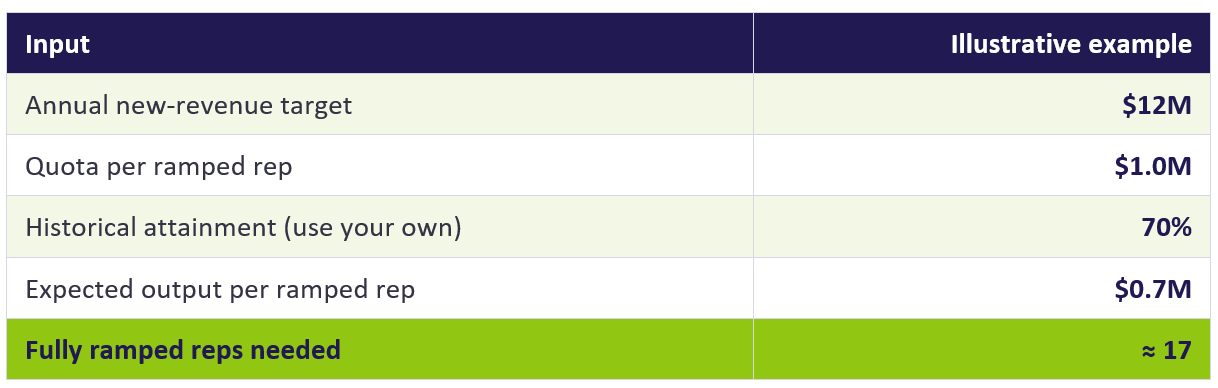
That is roughly 17 fully ramped reps. The math has just turned an opinion about team size into a number you can test against your own history. If real attainment is 60% instead of 70%, the answer moves from 17 to 20.
Step 2: Account for Ramp Time
A new hire is not a ramped rep. The commonly cited average is about seven months to reach full productivity, so a hire delivers only part of a ramped rep's output in the year they join, and how much depends on when they start.
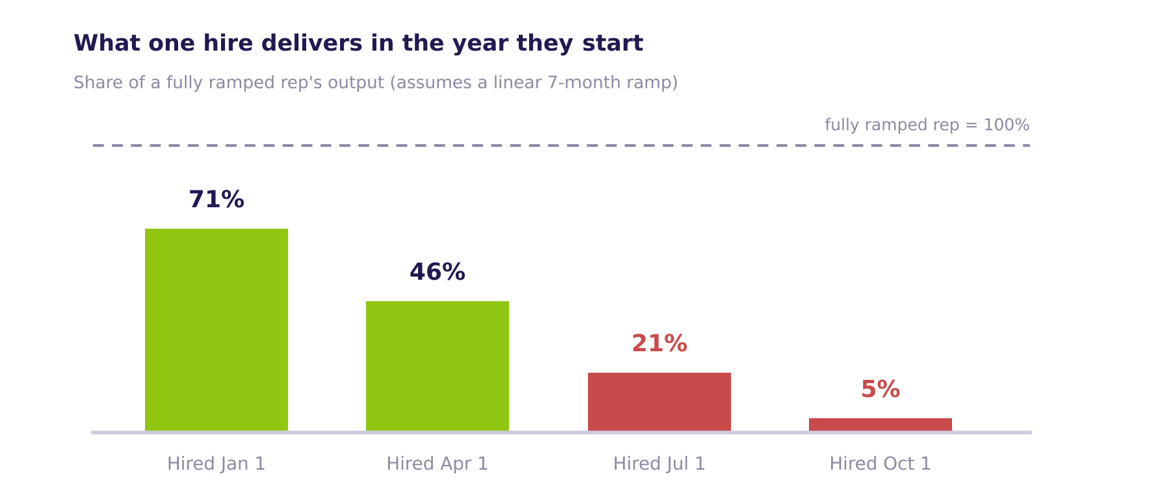
Assuming a linear seven-month ramp, a rep who starts in January delivers about 71% of a ramped rep's full-year output. Start in July and it falls to about 21%. A hire made in the second half of the year is, for practical purposes, next year's capacity.
Step 3: Plan for the Reps You Will Lose
Capacity is not only what you add. It is also what walks out. Turnover often arrives just as reps become productive, which removes ramped capacity and restarts the ramp clock for the replacement. Use your own attrition rate and build the buffer into the plan before it happens. If you have 12 ramped reps and roughly 15% leave in a year, plan for about two departures.
Putting It Together: The Gap
In this illustrative example you need about 17 ramped reps and have 12 today. With two expected departures, you finish the year with about 10, which leaves a gap of about seven.
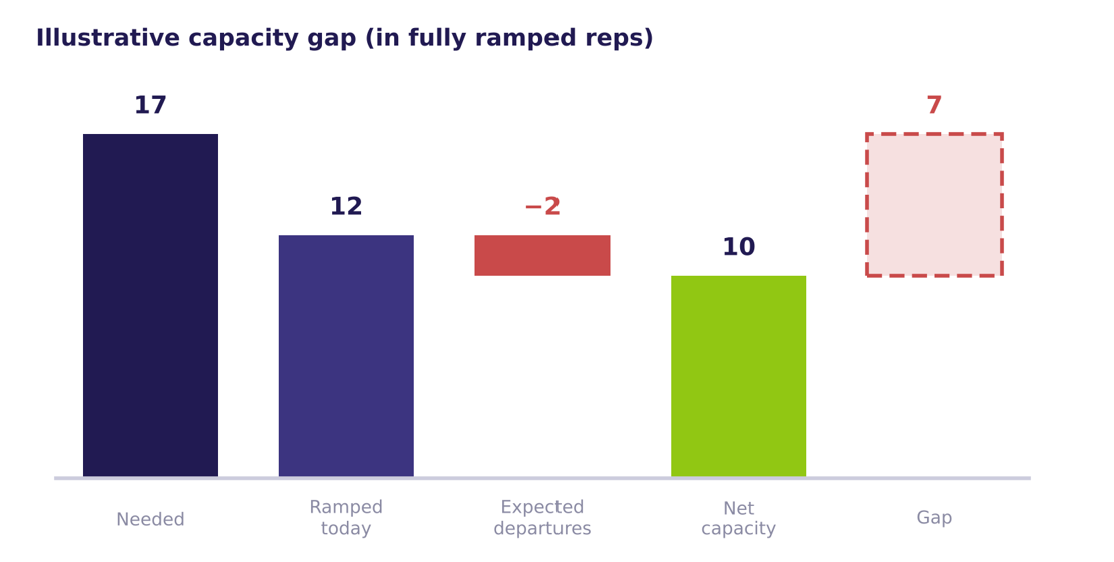
Now apply Step 2. Close that seven-rep gap with January hires and it takes about 10 people. Wait until April and it takes about 15. Wait until July and it takes about 33, which no company will hire.
A capacity gap you discover in the middle of the year cannot be closed by hiring that year. It has to be found in the planning cycle, before the year begins.
Step 4: Check That the Pipeline Can Feed Them
Reps can only sell what exists to be sold. Before adding capacity, check that there is enough pipeline, and enough addressable market, to keep it busy. Pipeline needed is the target divided by your win rate.
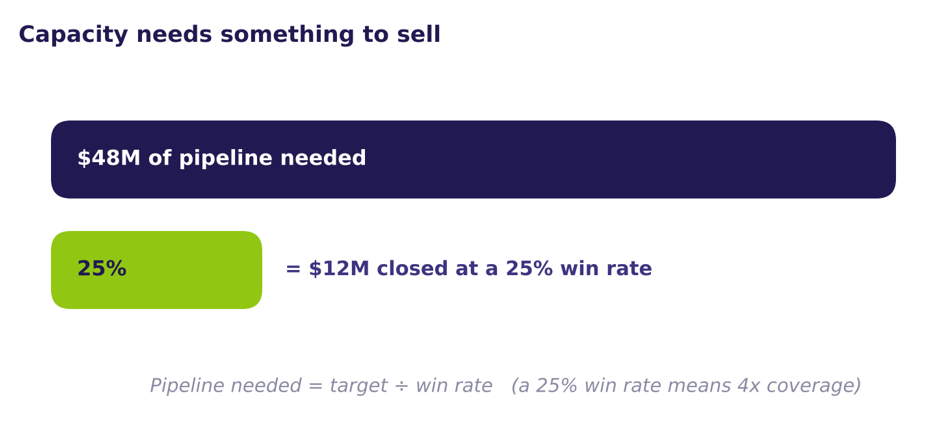
At a 25% win rate, a $12M target needs about $48M of pipeline, which is 4x coverage. If your territories and ideal customer profile cannot support that, extra reps will not create revenue. They will compete for the same accounts. This is why territory and account design, built on market size, workload and whitespace, belongs in the same conversation as headcount.
Questions for Your Next Planning Meeting
• Where did the headcount number come from? Can the team show the math from the revenue target?
• What attainment are we assuming? Our actual history, or the quota?
• When do the hires start? What will each one deliver this year, given our ramp?
• What is our attrition buffer? And what happens to capacity when someone leaves just after ramping?
• Is there pipeline for them? At our win rate, what coverage does the target require?
The Bottom Line
A hiring plan is a revenue plan in disguise. In the OutPerform Method, this work sits across Define, which covers territory and account design, and Shape, which covers role clarity and capacity modeling. Get the math right before the year starts, and headcount stops being a debate and becomes a decision.
BOOK A FREE CALL Is your pipeline predictable, or are you hoping for the best? Custom HTML/CSS/JavaScript |

#SalesLeadership #CapacityPlanning #RevenueGrowth #SalesStrategy
