
Loud About Real Problems. Quiet About Noise.
REVENUE INTELLIGENCE | FOR CEOs & REVENUE LEADERS
Loud About Real Problems. Quiet About Noise.
How AI agents in the Outperform Revenue Intelligence platform, powered by SkyGeni, end alert fatigue and surface only the revenue signals worth your attention.
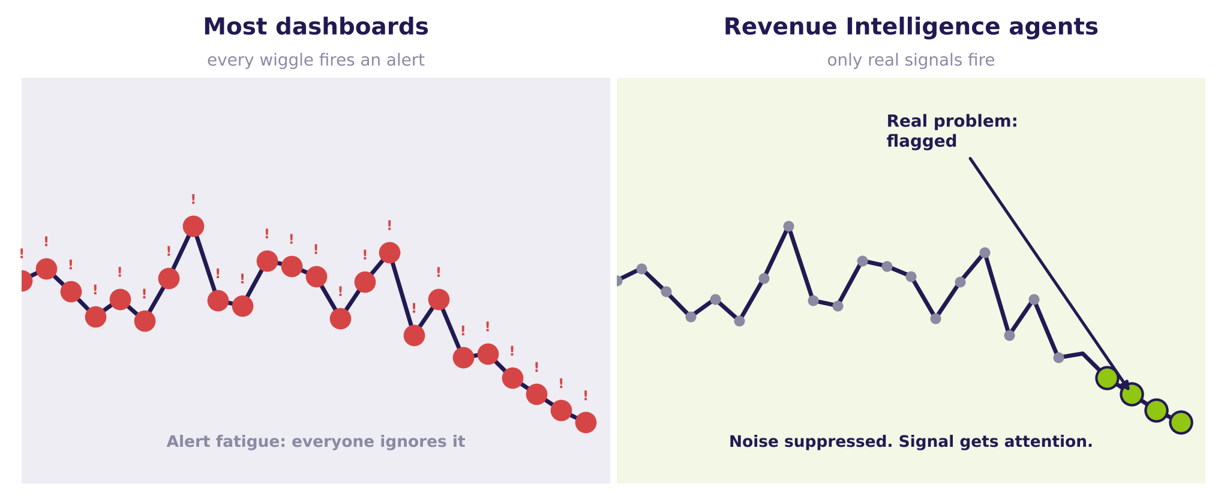
Most sales dashboards have a problem. Too many alerts, so everyone ignores them.
For a CEO or revenue leader, that is more than an annoyance. When every metric wiggle triggers a notification, the one signal that actually matters gets buried with the rest. By the time someone notices, a quarter is already at risk.
An alert that gets ignored is worse than no alert at all. It teaches your team to stop looking.
A Different Kind of Alert
The AI agents inside our Outperform Revenue Intelligence platform, powered by SkyGeni, work differently. They monitor your revenue engine around the clock and speak up only when it counts.
They check your key metrics every hour
Every hour, the agents review the numbers that decide whether you hit your target:
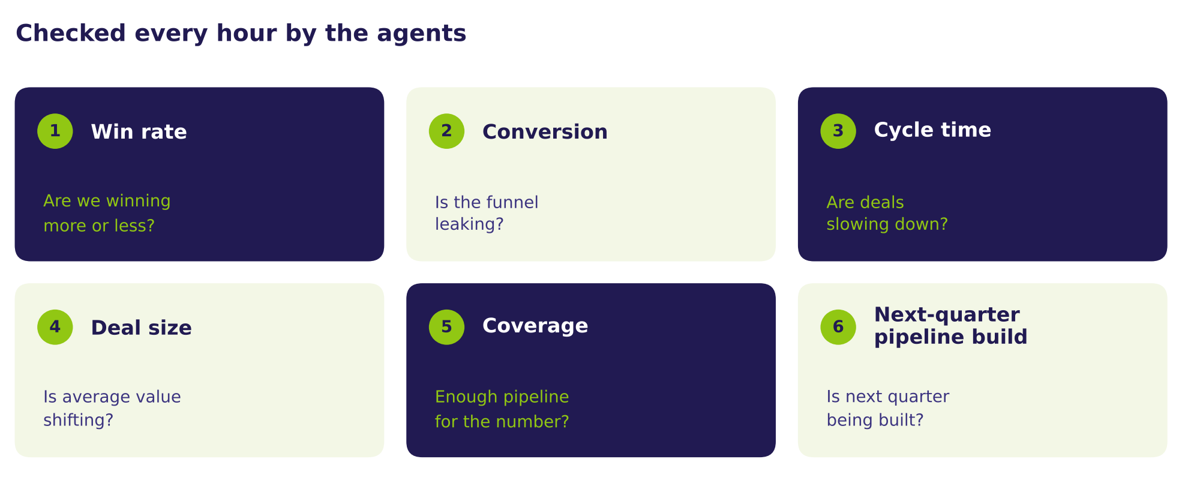
• Win rate
• Conversion
• Cycle time
• Deal size
• Coverage
• Next-quarter pipeline build
They only fire when a change is both unusual and big
An alert fires only when a change is statistically unusual and big enough to matter. Both tests have to pass. A change that is merely large but within normal variation stays quiet. A change that is technically unusual but trivial in size stays quiet too.
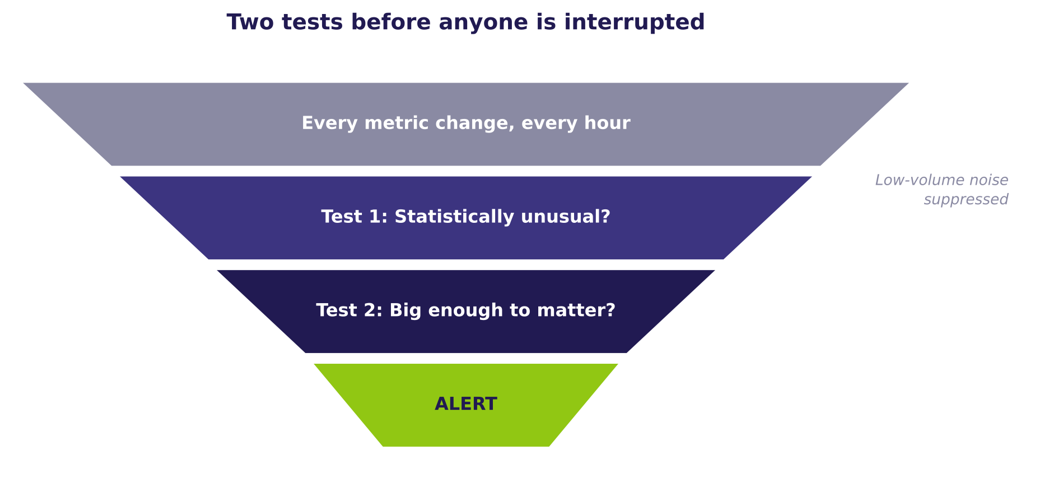
Low-volume noise gets suppressed. A handful of deals in a small segment can swing a percentage dramatically without telling you anything real, so those swings do not interrupt your day.
Slow declines get flagged early
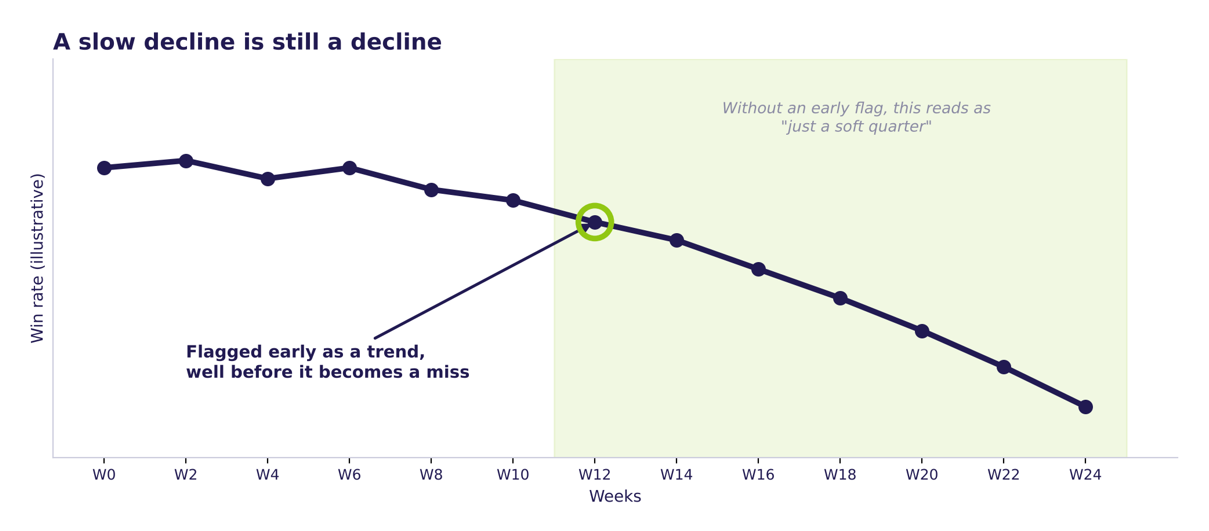
The most expensive problems rarely arrive as a single dramatic drop. They creep in a little each week until the quarter is already lost. The agents catch slow, quarter-over-quarter decline and flag it early as a trend, while there is still time to respond.
Every Alert Comes with the Evidence
A notification without proof just starts a debate. Every alert from the platform comes with the numbers behind it, so a leader can act on it and defend the call in the room.
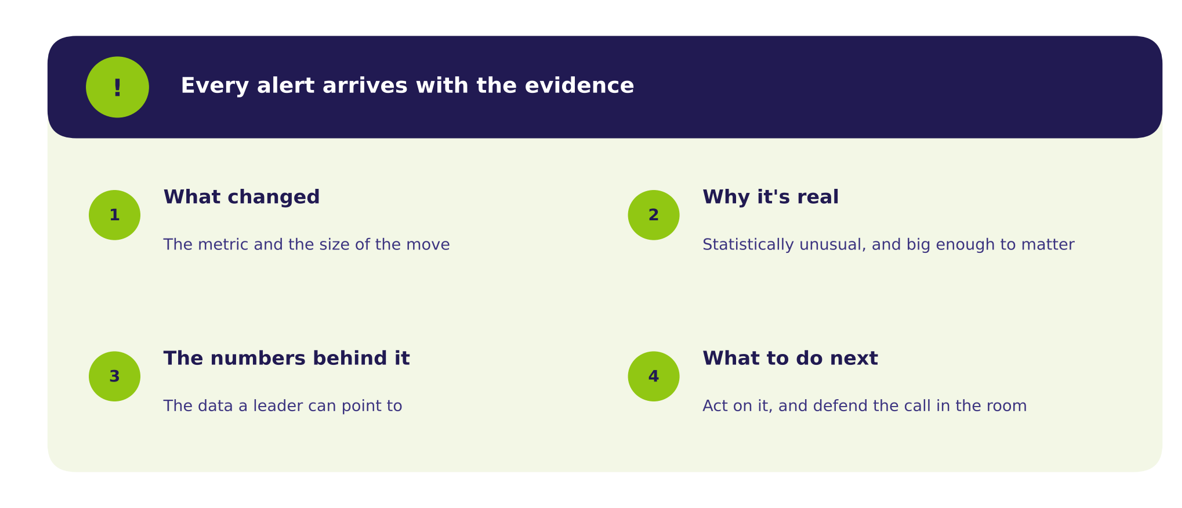
That matters when you are explaining a forecast change to your board, challenging a regional number, or deciding whether to shift resources. You are not relying on a hunch or a color on a dashboard. You are pointing at the data.
What This Means for Your Leadership Team
• Attention goes where it is needed. Your leaders stop scanning for problems and start responding to confirmed ones.
• Trends are caught while they are still fixable. Slow erosion in win rate, conversion or pipeline build is flagged early.
• Decisions are defensible. The numbers travel with the alert, so action does not stall in a debate about whether the data is right.
• Trust in the system returns. When alerts are rare and real, people read them.
The Bottom Line
Loud about real problems. Quiet about noise.
That is the difference between a dashboard people ignore and an intelligence layer a leadership team relies on. The question is not whether your revenue data contains early warnings. It is whether anyone is hearing them.
Want to see which of your metrics would be flashing today? Book a demo and find out.
BOOK A FREE CALL Is your pipeline predictable, or are you hoping for the best? Custom HTML/CSS/JavaScript |