The High Cost of Sales Rep Turnover – And How to Stop It
SALES RETENTION|FOR CEOs & BUSINESS OWNERS
The High Cost of Sales Rep Turnover – And How to Stop It
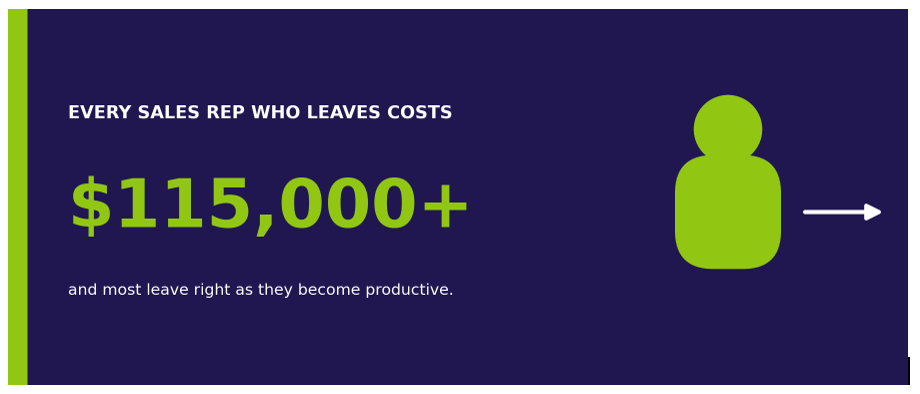
Every sales rep who leaves costs your company $115,000 or more, and most leave just as they become productive.
If you run the company, this lands on your P&L, not only on HR’s desk. A departure hits revenue, customer relationships and your managers’ time at once.
This post breaks down what turnover really costs, why reps leave, and what the best-run sales organizations do to keep their talent before it walks out the door.
You pay for 7 months of ramp-up, then reps start leaving
The average sales rep needs about seven months, nearly 210 days, to reach full productivity. During that time you pay for recruiting, onboarding, CRM and tech access, and your managers’ attention.
Many companies see voluntary turnover begin around month 8 to 10. You fund the ramp, then lose the rep right when the investment starts to pay back.
What one departure costs
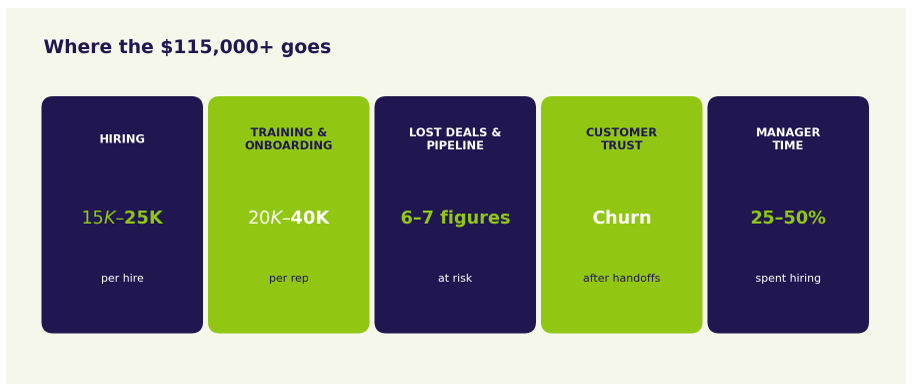
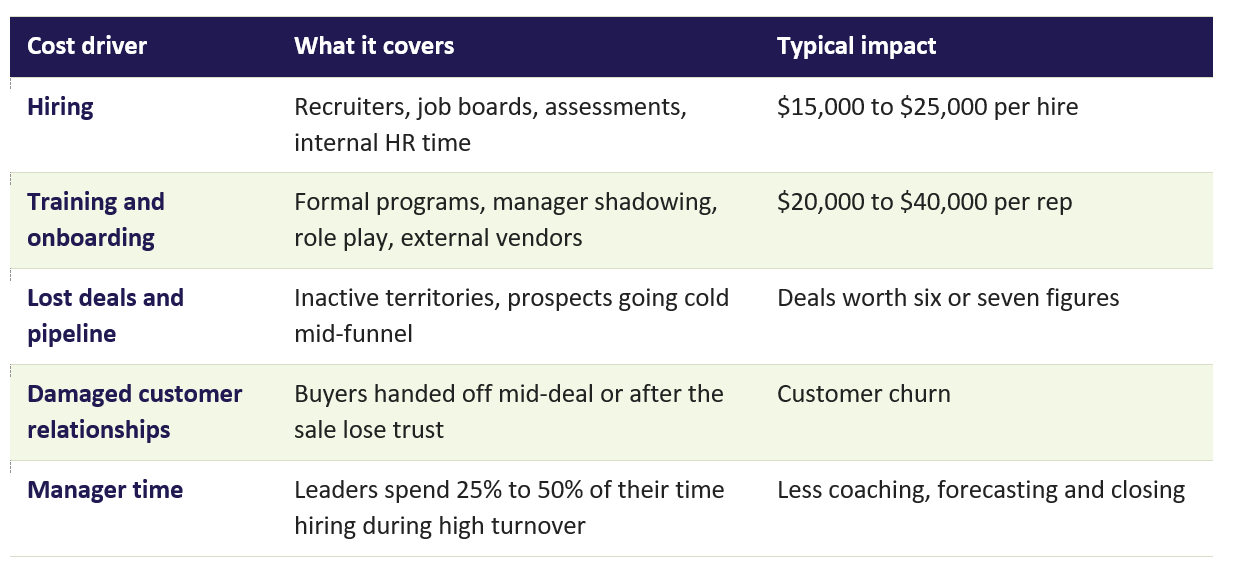
Salesforce research and industry benchmarks put the cost of losing a rep at $115,000 or more. It breaks down like this:
The costs that never show up on a spreadsheet
Turnover also drains morale and momentum:
● Top performers get frustrated covering the gaps.
● Managers burn out from constant hiring and retraining.
● Culture suffers when the team never stabilizes.
Sales runs on confidence, and high turnover shakes it at every level.
Why reps leave: it is rarely about money
According to LinkedIn’s Global Talent Trends and other studies, reps usually cite:
● Lack of coaching and development
● An unclear career path
● Burnout from poor onboarding
● Low engagement or recognition
● A toxic or chaotic team culture
People don’t quit jobs. They quit managers and broken systems, and teams that don’t invest in their growth. Those are leadership decisions, which means you can change them.
The question isn’t whether your reps are working hard. It is whether your system gives them a reason to stay.
What works: invest in your reps before they walk
Flashy incentives and ping pong tables do not fix this. A sales culture built on coaching, development and support does.
1. Give every rep personalized coaching
High performers want feedback and want to improve. Pipeline-review one-on-ones are not enough. Leading organizations build coaching programs with:
● Regular deal reviews and role play
● Individual development plans
● Peer-to-peer mentoring
● Coaching on mindset and resilience
Coaching helps reps close more, and it shows them you are invested in their success. That builds loyalty and performance together.
2. Use AI-driven training to shorten ramp time
New reps expect fast, adaptive training, not boot camps and binders. AI-powered platforms can:
● Deliver short, adaptive training content
● Recommend modules based on rep behavior or skill gaps
● Simulate real sales conversations for practice and feedback
● Track progress and predict performance outcomes
Companies using AI in sales training see up to 40% faster ramp times. A shorter ramp lowers the cost and the risk of early attrition.
3. Keep developing your top performers
Your best rep this year can be your underperformer next year if you stop developing them. New tools, competitors and buyer behaviors demand continuous learning. High-growth companies offer:
● Monthly skill-building workshops
● External certifications, such as negotiation, storytelling or tech stack
● Cross-functional training with marketing and product
● Career paths that include leadership or strategic roles
When reps see a future in your company, they are far more likely to stay.
How leaders build a sales culture that sticks
Retention is about the whole sales organization, not one rep. Four moves for the leadership team:
● Celebrate development, not just results. Recognize reps who improve, not only those who hit quota.
● Coach your managers. Frontline managers need training to be coaches, not taskmasters.
● Build psychological safety. Reps should feel safe asking for help, admitting mistakes and experimenting.
● Use data to guide development. Use performance metrics, win/loss analysis and deal reviews to build targeted improvement plans.
Retention is a growth strategy
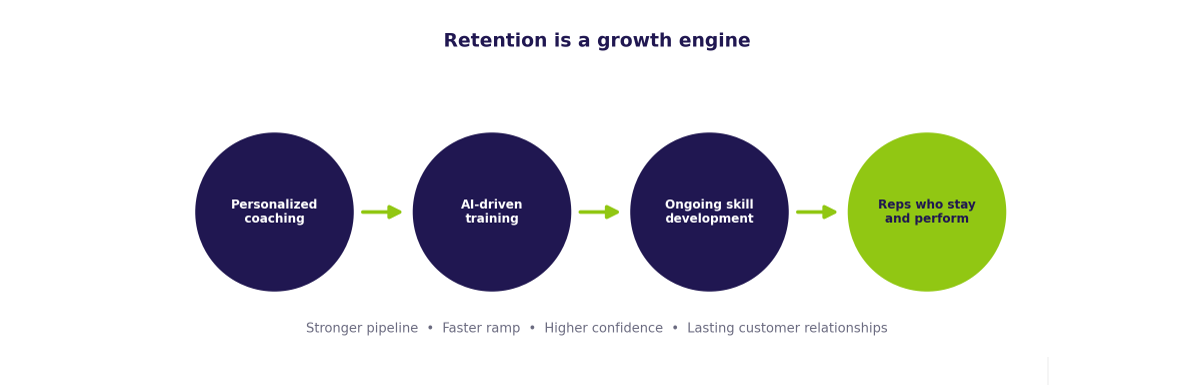
Most leaders treat retention as a way to save money. It is a growth engine.
When you retain and develop your reps:
● Your pipeline gets stronger and more consistent.
● New hires learn faster.
● Your team’s expertise and confidence grow.
● Long-term relationships build brand equity with customers.
You also get a team that is bought in emotionally, intellectually and professionally.
BOOK A FREE CALL Is your pipeline predictable, or are you hoping for the best? . Custom HTML/CSS/JavaScript |

At OutPerform Institute, we help sales teams put coaching, AI-driven training and skill development in place, so you keep your best reps and grow revenue. Learn more about our High Performance Sales Coaching and Training Programs.
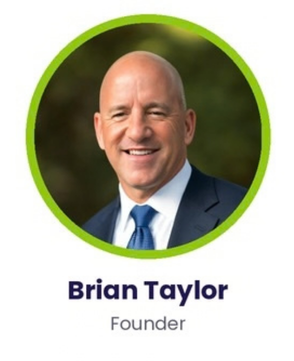
Brian Taylor
CEO & Co-Founder, OutPerform Institute
35+ years of sales and leadership experience, helping teams grow revenue and retain top talent
