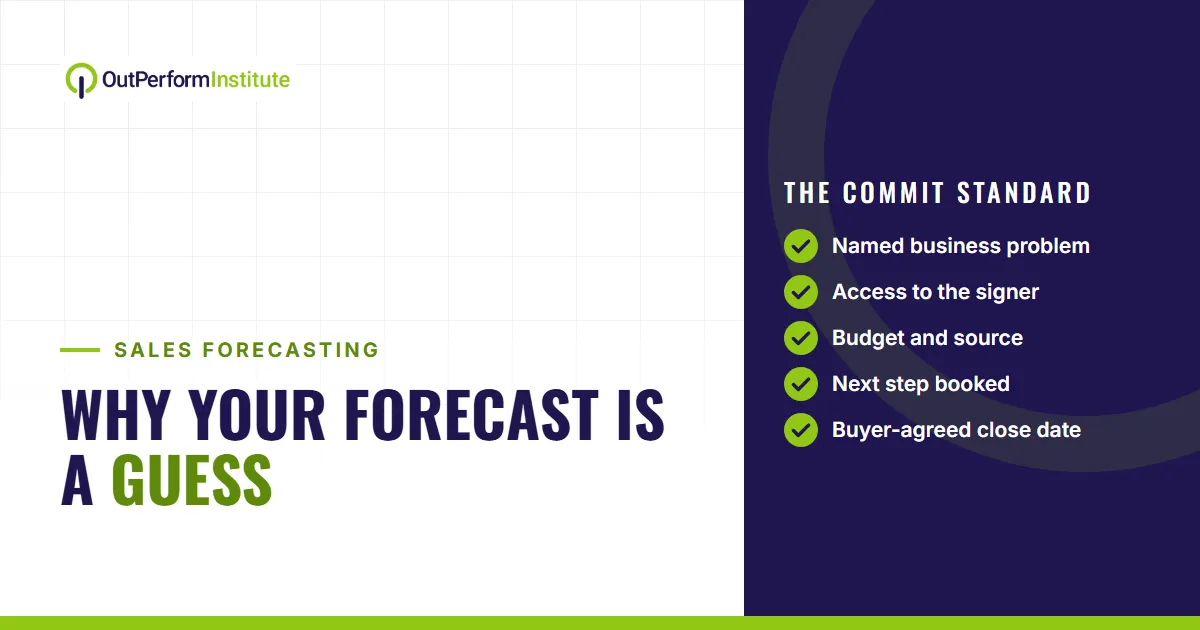
Why Your Forecast Is a Guess
Ask five reps what "commit" means and you will get five different answers. Then all five roll up into a single number, and that number goes to the board. At OutPerform Institute, we see this in almost every mid-market sales organization we diagnose. The forecast isn't wrong because people are lazy. It's wrong because nobody defined what belongs in it.
The Forecast Problem Nobody Talks About
Why forecast misses are a standards problem, not an effort problem
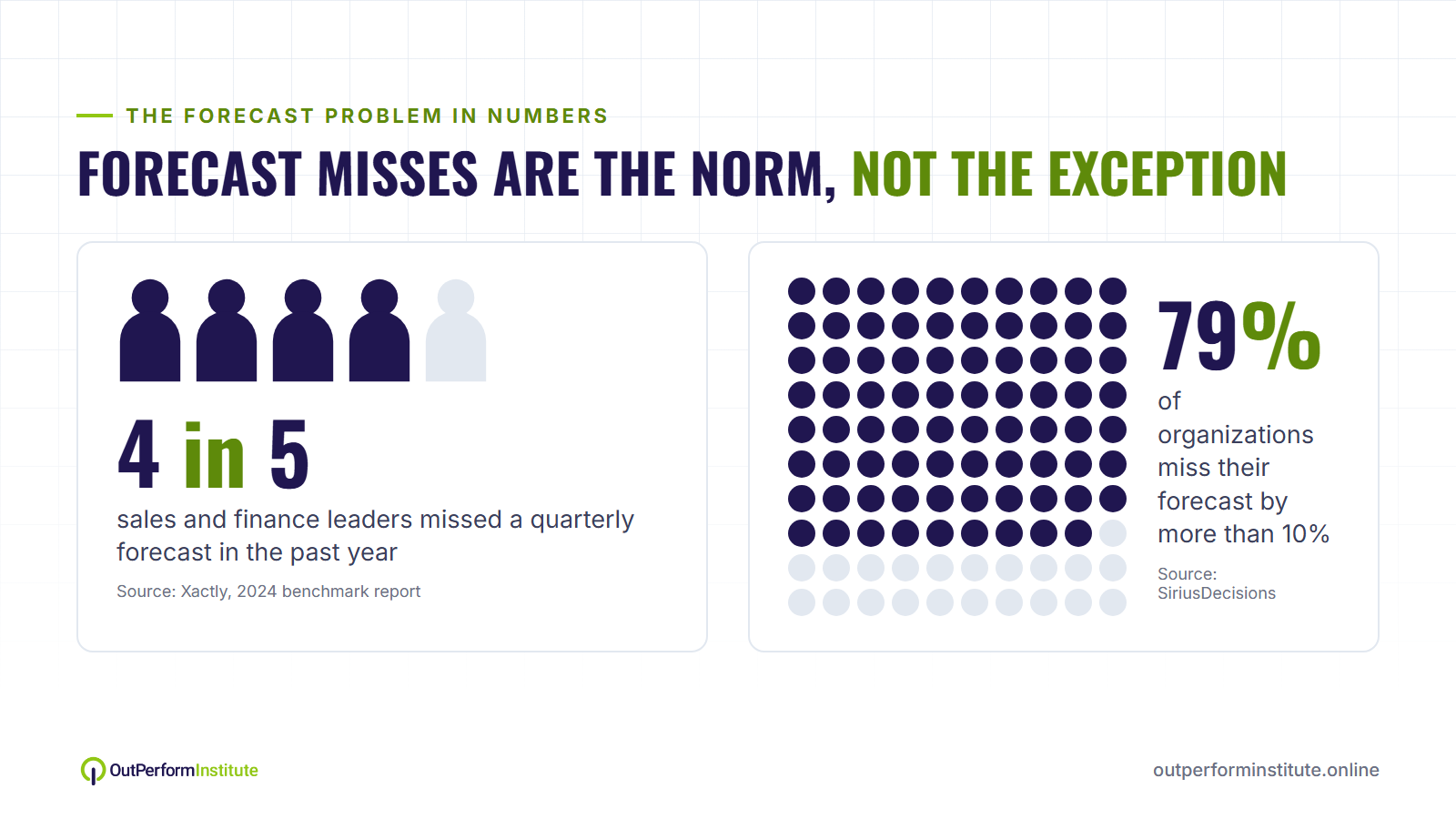
Forecast misses are common. Xactly's 2024 benchmark report found that four in five sales and finance leaders missed a quarterly forecast in the past year. SiriusDecisions found that 79% of organizations miss their forecast by more than 10%.
That isn't 79% lazy teams. As our founder Brian Taylor puts it, it's 79% "flying with a foggy windshield."
When the sales system wasn't built to be predictable, leaders can't see the gap until it's too late to close it. So they guess. They push reps harder. They hope.
Five Reps, Five Definitions
Here is what "commit" typically means inside one sales team:
Rep 1: the champion is excited.
Rep 2: the proposal went out.
Rep 3: the buyer gave a verbal yes.
Rep 4: legal has the paperwork.
Rep 5: he needs the month to look right.
Every one of those deals lands in the same column. Leadership adds them up, presents a number, and then spends the last two weeks of the quarter explaining why it didn't arrive.
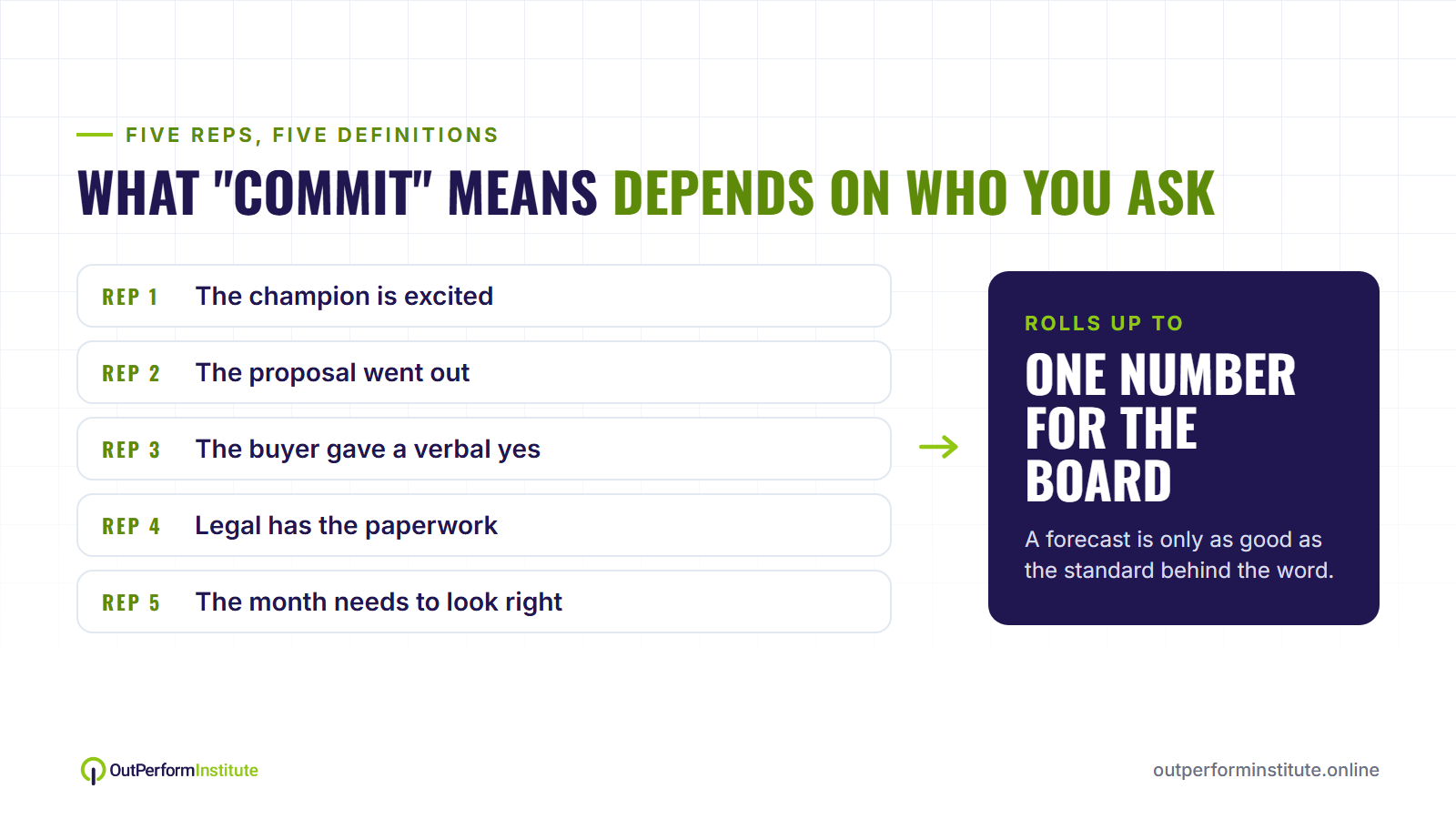
That is not a rep problem. It is a system problem. A forecast is only as good as the standard behind the word.
Confidence Is Not Evidence
A rep says a deal is 90% likely to close. What does that number actually mean?
Usually, it means they feel good about it. Ask what moved the deal from 60% to 90% and you often get silence. No new signer engaged. No next step booked. Nothing changed except the rep's gut.
We call this the confidence tax. Every forecast built on feel instead of proof pays it eventually, usually in the final weeks of the quarter, when the "sure thing" doesn't close and nobody can explain why.
The fix isn't asking reps to be more honest. It's removing their ability to guess.
The 5-Point Commit Standard
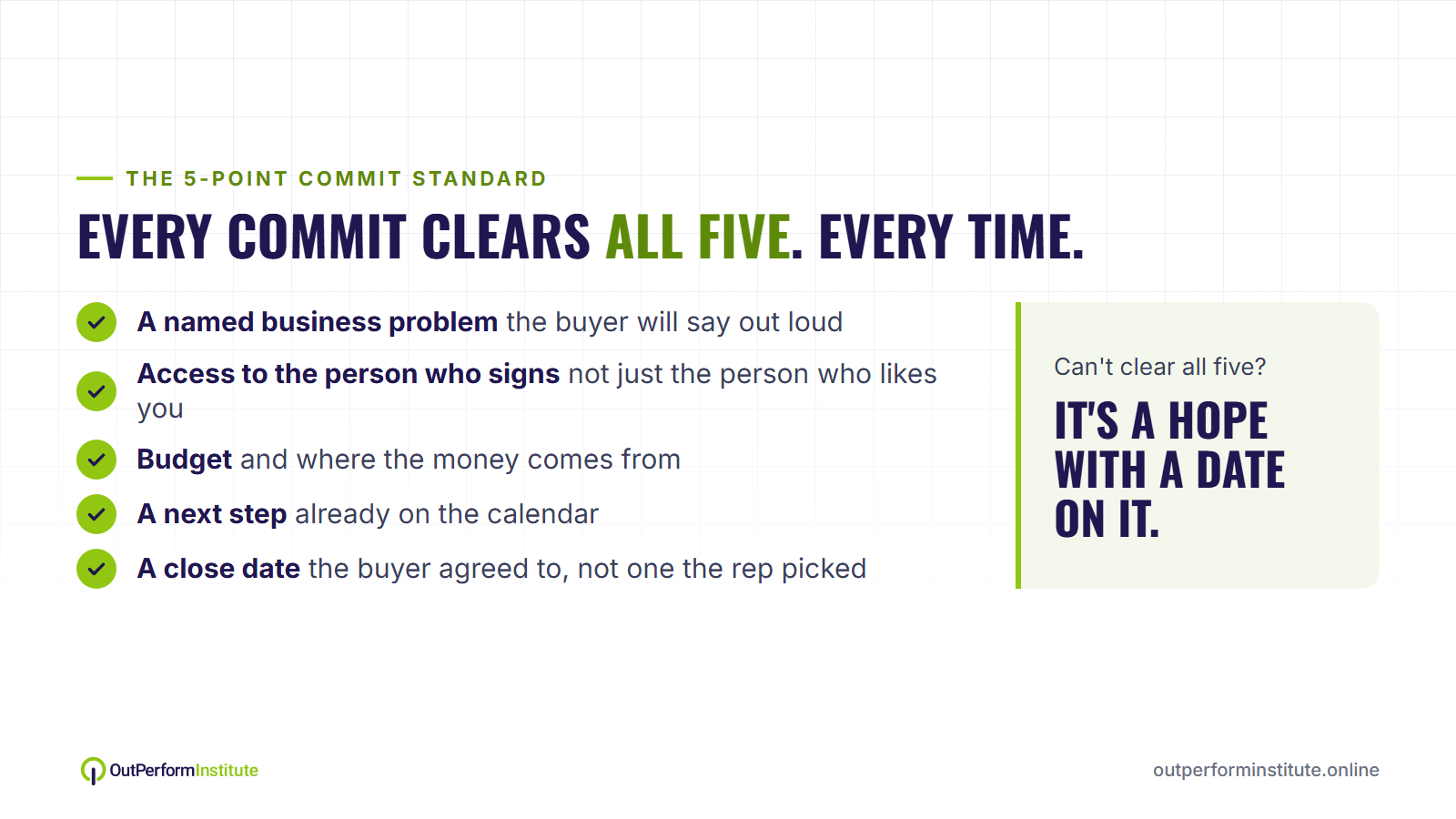
A deal should earn its place in the commit column with the same proof every time. Before a deal can be called a commit, it should clear all five:
A named business problem the buyer will say out loud.
Access to the person who signs, not just the person who likes you.
Budget, and where the money comes from.
A next step already on the calendar.
A close date the buyer agreed to, not one the rep picked.
If a deal cannot clear all five, it isn't a commit. In Brian's words, "It is a hope with a date on it."
Where Forecasts Actually Break
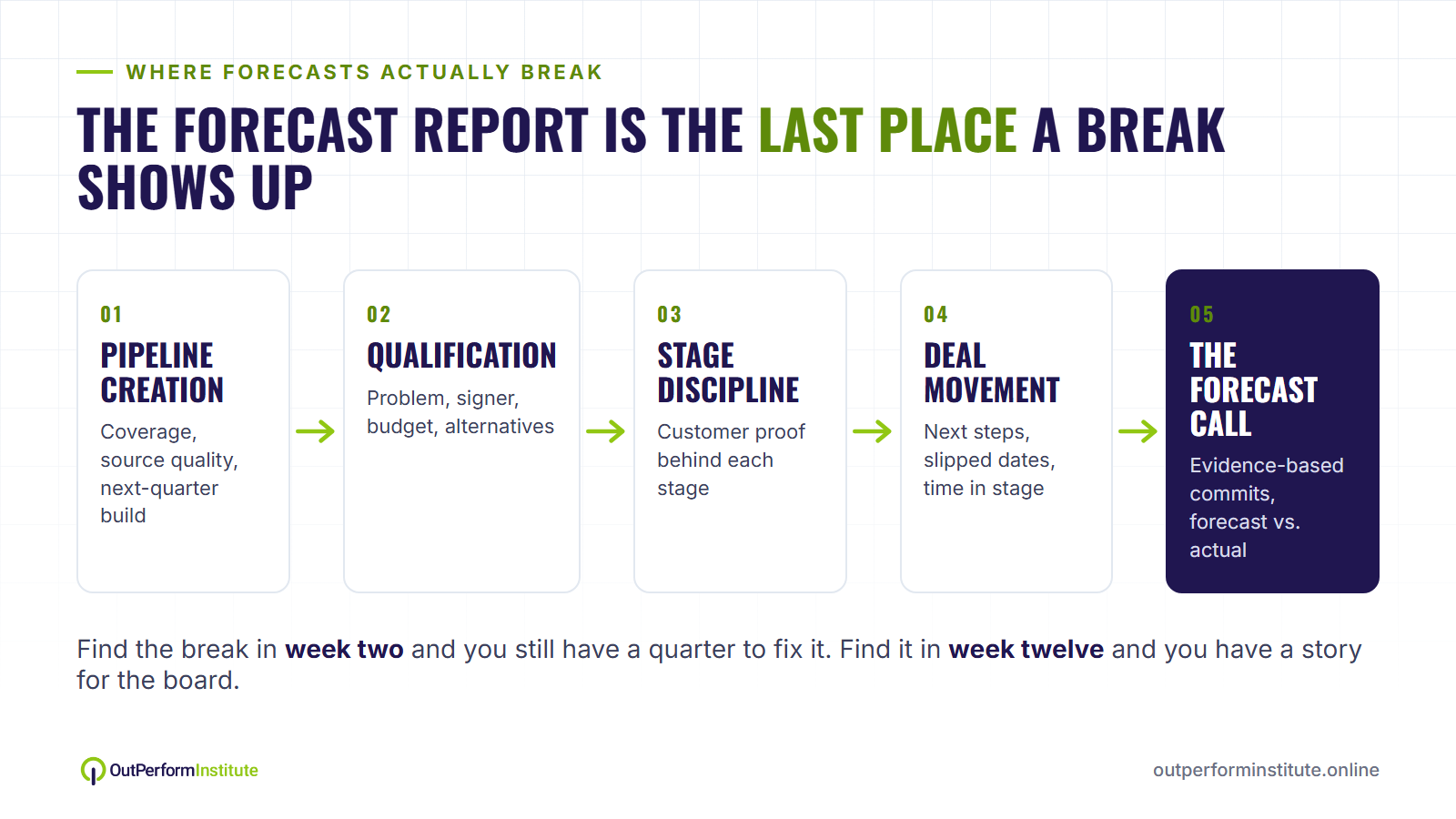
The forecast report is the last place a problem shows up, because everything it reports already happened upstream. In our diagnostics, mid-market pipelines break in five places:
Pipeline creation: coverage, source quality, and whether anyone is building pipeline for the quarter after this one.
Qualification: a named problem, access to the signer, budget, and the real alternatives.
Stage discipline: customer proof behind each stage and honest backward moves.
Deal movement: scheduled next steps, slipped close dates, and time in stage.
The forecast call: evidence-based commits, written accountability, and forecast-versus-actual review.
Every one of those is a design decision. None of them is an effort problem.
How the Control Pillar Fixes It
Inside the OutPerform Method, forecasting lives in the Control pillar: pipeline architecture, forecasting protocols, CRM configuration, and an accountability framework that removes guesswork at every stage.
In practice, that means the commit standard gets written down, built into stage exit criteria, and inspected on a weekly cadence. A deal earns its spot in the forecast. It doesn't get one because a rep feels good about it.
Looking Ahead
Find the break in week two and you still have a quarter to fix it. Find it in week twelve and you have a story for the board.
So here's the question worth asking: if you applied the five-point standard to your commit list today, how much of it would survive?
If you'd rather know now than in week twelve, let's look at it together.
Founder & CEO level · No pitch
