
Your Sales Team Stops Being "Your Team" the Day You Sit at the Executive Table
SALES LEADERSHIP | FOR CEOs & BUSINESS OWNERS
Your Sales Team Stops Being “Your Team” the Day You Sit at the Executive Table
Why the strongest sales leaders think beyond sales, and what that means for the company you run.
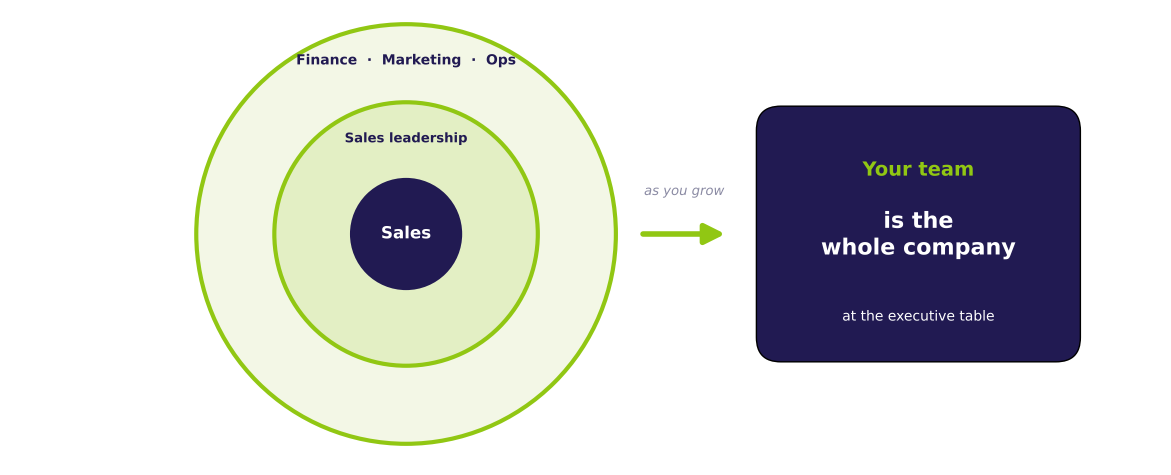
I read a good piece this week in St. Louis Small Business Monthly. Julie Tuggle-Nguyen writes that as leaders grow, their definition of “my team” must grow with them. At the top, the team is the whole company.
I see the same thing in sales.
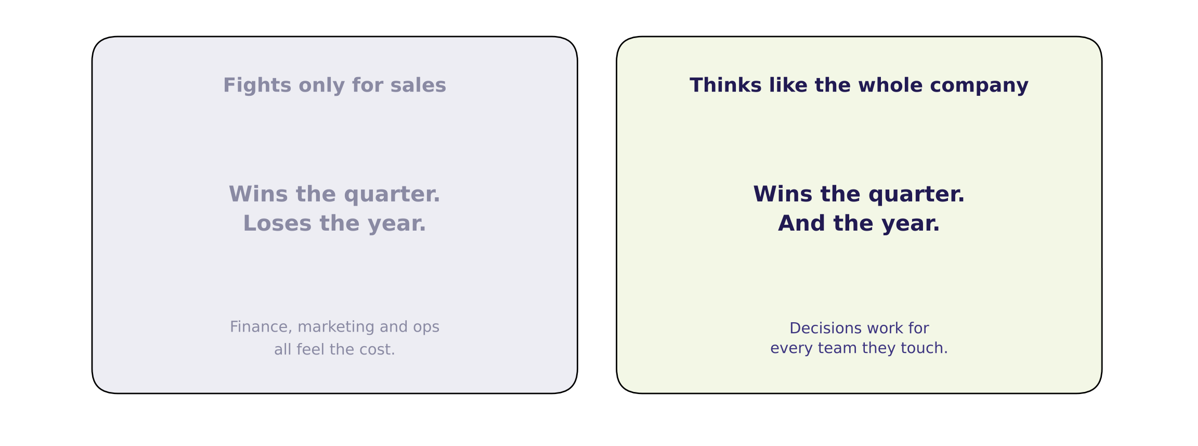
A VP of Sales who only fights for sales can win the quarter and lose the year.
If you are a CEO or business owner, you have likely seen it. The sales number looks strong while finance, marketing and operations quietly absorb the cost: promises that ops cannot deliver, discounts that finance has to unwind, campaigns that marketing never heard about. Every team feels it, and the damage often shows up a quarter or two later.
Three Things the Strong Ones Do
The sales leaders who make the leap from running a function to running part of the business do three things consistently.
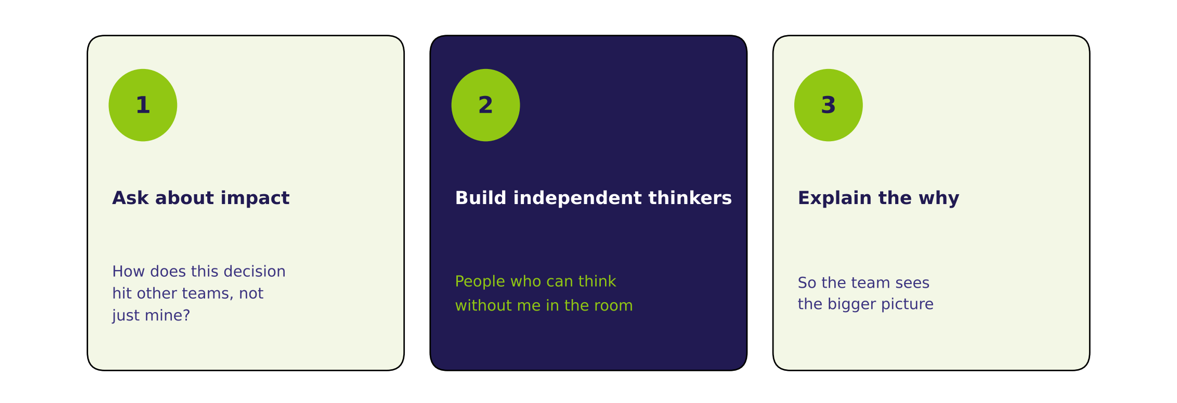
1. They ask how a decision hits other teams, not just theirs
Before a pricing change, a territory shift, or a new comp plan goes out, they ask who else it touches. That question is cheap to ask early and expensive to skip.
2. They build people who can think without them in the room
A leader who is the only one who can make the call has built a bottleneck, not a team. The strong ones develop people who understand the goals well enough to decide well on their own.
3. They explain the “why,” so their team sees the bigger picture
When reps understand why a decision was made and how it serves the company, they execute with judgment instead of just compliance. They also start asking the first question on their own.
What One Decision Looks Like From the Other Side
Take a simple example. A sales leader offers a deep discount to close the quarter. From inside sales it looks like a win. From everywhere else it looks different.
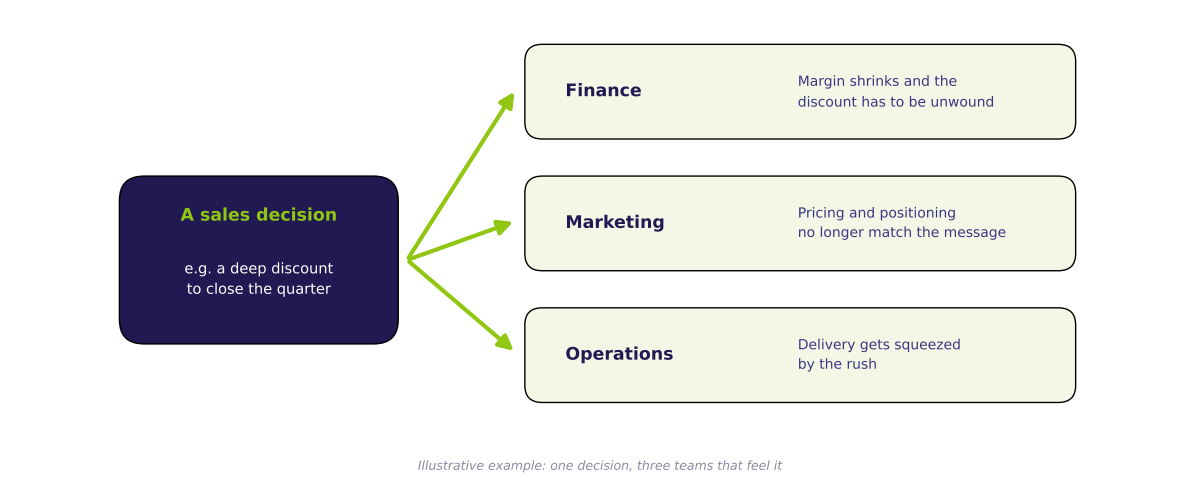
None of those teams were in the room. Each one finds out later, and each one pays for it. This is what it means for the definition of “my team” to stay too small.
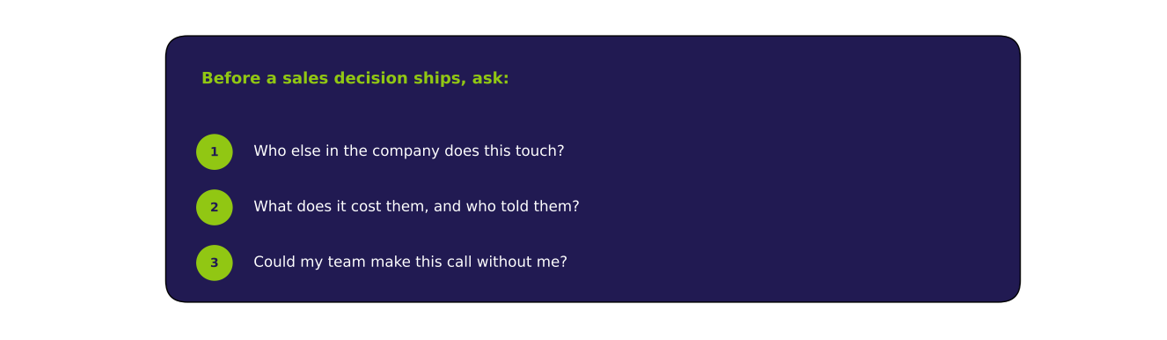
Questions Worth Making a Habit
You do not need a new process to change this. You need a few questions asked at the right moment, by the leader and by the people around them.
What You Can Do as a CEO This Week
• Ask for the impact line. Make every major sales proposal name the other teams it touches before it reaches you.
• Review a recent win. Pick one big deal and ask finance, marketing and ops what it cost them.
• Bring the functions together. Have your sales leader hear the finance and ops view directly, not secondhand.
• Reward the whole-company result. Recognize leaders who made the company better, not only the number.
Where the OutPerform Method Fits
This is the thinking behind the OutPerform Method, which is built on five pillars: Define, Shape, Enlighten, Excite, and Control. Each one is designed to tie sales back to the whole business instead of leaving it as a function on its own.
Here is a question I keep coming back to: one of the five carries more weight than the rest. Which one would you pick, and why? I would like to hear your answer, because it usually points to where your business feels the most strain.
The Bottom Line
Growing as a leader means widening your definition of “my team” until it covers the whole company. The same goes for the sales organization you lead: it performs best when it is built to serve the whole business, not just the number.
BOOK A FREE CALL Is your pipeline predictable, or are you hoping for the best? Custom HTML/CSS/JavaScript |